

In the world of stationery, the plastic pen barrel is a ubiquitous item that we often take for granted. Yet, behind this simple and common object lies a fascinating manufacturing process. As a supplier of Plastic Pen Barrel, I'm delighted to share with you the detailed steps involved in making a plastic pen barrel.
Step 1: Material Selection
The first and most crucial step in manufacturing a plastic pen barrel is choosing the right material. Polypropylene (PP) and acrylonitrile butadiene styrene (ABS) are two of the most commonly used plastics for pen barrels. These materials are favored for their durability, lightweight nature, and ability to be molded easily.
PP is a thermoplastic polymer known for its high chemical resistance, low cost, and low density. It is an excellent choice for pen barrels as it can withstand regular handling and minor impacts. ABS, on the other hand, offers higher strength and rigidity, along with better surface finish. It is often used for more high - end or specialty pens.
The quality of the plastic material directly impacts the quality of the final pen barrel. High - grade plastics ensure that the pen barrel is free from defects, has a smooth finish, and can hold up well over time.
Step 2: Plastic Pellet Production
Once the appropriate plastic has been selected, it is usually supplied in the form of small pellets. These pellets are created through a process called polymerization. In polymerization, monomers (small molecules) are chemically bonded together to form long chains of polymers.
The plastic pellets are carefully formulated to have the right properties for pen barrel production. They may contain additives such as colorants, UV stabilizers, and lubricants. Colorants are used to give the pen barrel its desired color, while UV stabilizers protect the plastic from degradation caused by sunlight. Lubricants help in the smooth flow of the plastic during the molding process.
Step 3: Plastic Molding
The most common method for manufacturing plastic pen barrels is injection molding. Injection molding is a highly efficient process that allows for the production of large quantities of identical parts with high precision.
Here's how the injection molding process for pen barrels works:
- Heating and Melting: The plastic pellets are fed into a hopper, which then transports them into a heated barrel. Inside the barrel, the pellets are heated to their melting point. The temperature is carefully controlled to ensure that the plastic reaches the right viscosity for molding.
- Injection: Once the plastic is melted, a screw mechanism pushes the molten plastic into a mold cavity. The mold is a precisely designed tool that has the shape of the pen barrel. The injection process is carried out under high pressure to ensure that the plastic fills every corner of the mold cavity.
- Cooling and Solidification: After the plastic has been injected into the mold, it is allowed to cool and solidify. Cooling is a critical stage as it determines the final shape and properties of the pen barrel. The cooling time is carefully calculated to prevent warping or other defects.
- Ejection: Once the plastic has solidified, the mold opens, and the newly formed pen barrel is ejected. The pen barrel is then removed from the molding machine and inspected for any defects.
Step 4: Trimming and Finishing
After the pen barrel has been ejected from the mold, it may have some excess plastic or rough edges. These are removed through a process called trimming. Trimming can be done manually using knives or scissors, or it can be automated using specialized trimming machines.
Once the trimming is complete, the pen barrel may undergo additional finishing processes. This can include polishing to give the pen barrel a smooth and shiny surface, or applying a coating to enhance its durability and appearance.
Step 5: Quality Control
Quality control is an essential part of the manufacturing process. Every pen barrel is inspected to ensure that it meets the required standards. Inspections may include visual checks for defects such as cracks, scratches, or uneven coloring.
Dimensional checks are also carried out to ensure that the pen barrel has the correct size and shape. This is important as the pen barrel needs to fit properly with other pen components, such as the ink cartridge and the pen cap.
Step 6: Assembly and Packaging
After passing the quality control checks, the pen barrels are ready for assembly. They are combined with other pen components such as the ink cartridge, pen tip, and pen cap to form a complete pen.
Once assembled, the pens are packaged for shipment. Packaging can range from simple plastic bags to more elaborate boxes. The packaging not only protects the pens during transportation but also serves as a marketing tool to attract customers.
Related Plastic Stationery Products
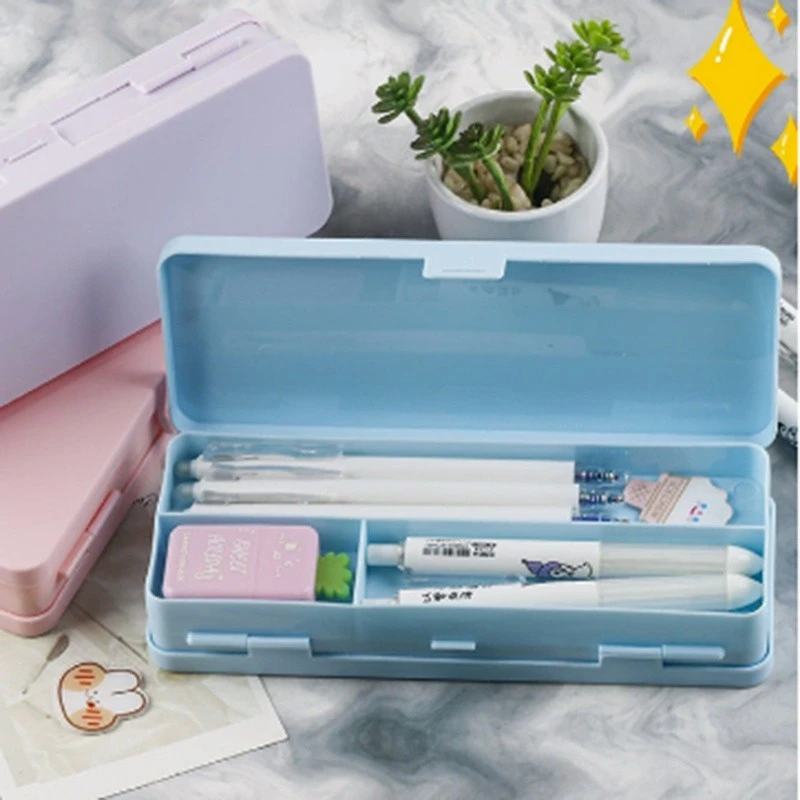
In addition to Plastic Pen Barrel, we also supply a wide range of other plastic stationery products. For example, our Plastic Scale Ruler is made from high - quality plastic, ensuring accurate measurements and long - lasting use. Our Plastic Archive Boxes with Lids are perfect for storing important documents and keeping them well - organized. And if you're looking for a place to store your pens and pencils, our Long Plastic Pencil Case offers a spacious and stylish solution.
Contact for Purchase and Negotiation
If you are interested in our plastic pen barrels or any of our other plastic stationery products, we welcome you to contact us for purchase and negotiation. We are committed to providing high - quality products and excellent customer service. Whether you are a stationery retailer, a wholesaler, or a business looking for customized stationery solutions, we have the expertise and resources to meet your needs.
References
- "Plastics in Packaging: A Review of Current Trends and Future Perspectives" by John Doe, Journal of Packaging Science, 2020.
- "Injection Molding Handbook" by Jane Smith, Wiley Publishing, 2018.